How to Open a Business Bank Account in UAE
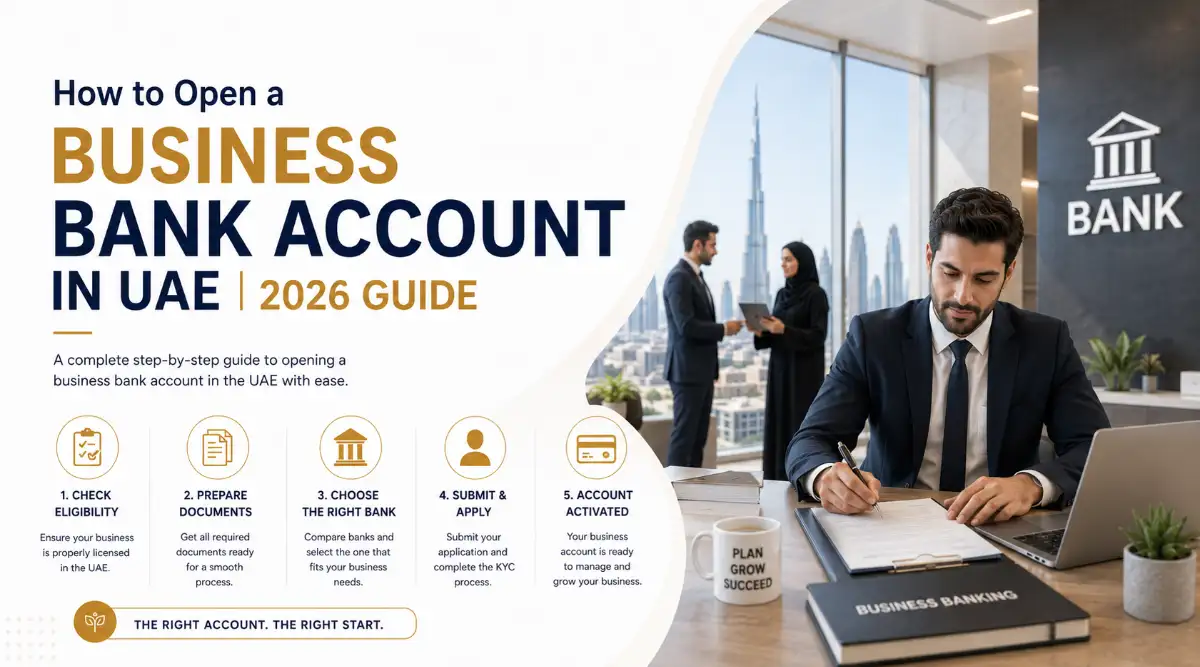
Opening a business bank account in the UAE is one of the most important steps after registering your company. Without a corporate bank account, you won't be able to receive customer payments, pay suppliers, manage payroll efficiently, or keep your business finances separate from your personal funds.
Although company registration has become easier in recent years, banks in the UAE follow strict Know Your Customer (KYC) and Anti-Money Laundering (AML) regulations. That means they'll carefully review your business before approving your application.
This guide explains the complete process, required documents, approval timeline, and practical tips to help you open your business bank account successfully in 2026.
Why Do You Need a Business Bank Account?
A corporate bank account helps you:
- Receive customer payments
- Pay suppliers and employees
- Separate personal and business finances
- Build business credibility
- Simplify bookkeeping and tax compliance
- Access business banking products and services
Who Can Open a Business Bank Account?
You can apply if you have a legally registered UAE business, such as:
- Mainland Company
- Free Zone Company
- Sole Establishment
- Professional Company
- Licensed Freelancer (where supported by the bank)
The exact eligibility depends on the bank's internal policies and your company's structure.
Step 1: Register Your Company
Before applying, your company must be legally incorporated and hold a valid trade licence.
Business structures include:
- Mainland Company
- Free Zone Company
- Professional Licence
- Commercial Licence
Without a valid licence, banks generally won't process a corporate account application.
Step 2: Choose the Right Bank
When comparing banks, consider:
- Monthly account fees
- Minimum balance requirements
- Online banking features
- International transfers
- Multi-currency accounts
- Customer support
- Merchant payment solutions
Different banks have different eligibility criteria and pricing, so it's worth comparing options before applying.
Step 3: Prepare Your Documents
Most banks will ask for:
Company Documents
- Valid Trade Licence
- Certificate of Incorporation (where applicable)
- Memorandum and Articles of Association (or equivalent documents)
- Shareholder details
- Ultimate Beneficial Owner (UBO) information
Personal Documents
- Passport copies
- Emirates ID (if applicable)
- UAE residence visa (if applicable)
- Passport-size photographs
Business Information
- Description of your business activities
- Expected transaction volumes
- Source of funds
- Business plan or company profile (some banks request this)
- Existing bank statements (for established businesses)
Requirements vary by bank and company type.
Step 4: Submit Your Application
Many UAE banks now allow eligible businesses to start the application online, while others require a branch visit or additional verification.
The bank's compliance team will review:
- Company ownership
- Nature of business
- Expected income
- Customer locations
- Source of funds
- Transaction profile
This review is a standard part of the approval process.
Step 5: Complete KYC & Compliance Checks
Every applicant must pass the bank's KYC and AML review.
Banks may ask questions such as:
- What products or services do you sell?
- Who are your customers?
- Which countries will you receive payments from?
- What is your expected monthly turnover?
- How will the account be used?
Providing clear and accurate information can help reduce delays.
Step 6: Account Approval
Once your application is approved, you'll receive:
- Business account number
- IBAN
- Online banking access
- Debit card (where applicable)
- Cheque book (if offered)
Approval times vary depending on the bank, the completeness of your documents, and the complexity of your business.
Common Reasons Applications Are Delayed or Rejected
Many applications face delays because of:
❌ Incomplete documents
❌ Unclear business activities
❌ Insufficient explanation of the source of funds
❌ Weak business profile
❌ Missing ownership information
Preparing a complete application can significantly improve your chances of approval.
Tips to Increase Approval Chances
- Keep your trade licence active and up to date.
- Prepare a professional company profile.
- Clearly explain your business model.
- Provide accurate transaction estimates.
- Respond quickly to compliance requests.
- Ensure your business activity matches your licence.
Setting Up Your Business Before Banking
Banks often look more favorably on businesses that demonstrate genuine operations. Having a professional workspace, a company website, and clear business documentation can strengthen your application.
If you're launching a startup or SME, SEEN Hub in Al Ain offers flexible coworking spaces, private offices, meeting rooms, and business facilities that can help you establish a professional business presence while keeping costs manageable.
Frequently Asked Questions
Can I open a business bank account before registering my company?
No. In most cases, you'll need a valid UAE trade licence and company registration documents before applying.
How long does approval take?
The timeline varies depending on the bank and your business profile. Simple applications may be processed relatively quickly, while businesses requiring additional compliance checks can take longer.
Do all banks require a minimum balance?
Not all do, but many business banking packages include minimum balance or monthly fee requirements. Compare account terms before choosing a bank.
Can a Free Zone company open a corporate bank account?
Yes. Free Zone companies can apply for corporate bank accounts, provided they meet the bank's eligibility and compliance requirements.
Conclusion
Opening a business bank account in the UAE is a critical step in building a successful company. While banks follow strict compliance procedures, a well-prepared application with complete documents, a clear business model, and accurate financial information can make the process much smoother.
Whether you're setting up a Mainland or Free Zone company, having a professional business environment can also strengthen your credibility. Entrepreneurs working from flexible business centers like SEEN Hub in Al Ain benefit from modern coworking spaces, private offices, and meeting rooms that support both day-to-day operations and client interactions.
Ready to elevate your work experience?
Discover premium coworking spaces and private offices designed for productivity and growth.
Explore SeenHub Workspaces